
Views: 0 Author: Site Editor Publish Time: 2026-07-15 Origin: Site


Premature failure of linear guide systems directly translates to unplanned downtime and compromised machining precision. When a production line stops abruptly, the resulting operational disruptions create substantial financial drains on any manufacturing facility. High-performance Linear Guide Rails are delicate precision components at their core. Their long-term longevity is dictated not merely by proper initial selection, but heavily relies on rigorous, environment-specific maintenance protocols. Overlooking these essential routines inevitably leads to mechanical degradation, scrapped parts, and costly operational halts.
This guide provides an evidence-based framework for facility managers and mechanical engineers. You will discover practical methods to optimize your maintenance cycles effectively. Furthermore, you will learn how to troubleshoot complex wear patterns and confidently determine exactly when to repair versus replace aging parts. We offer actionable strategies to help you sustain peak performance across your mechanical systems.
Lubrication is not one-size-fits-all; intervals must be calculated based on load, speed, and environmental exposure rather than generic calendar dates.
Contamination accounts for the majority of premature linear guide failures, making specialized sealing and wiper maintenance critical in harsh environments.
Routine vibration and friction analysis can shift maintenance from reactive to predictive, protecting the baseline accuracy of the machine.
Evaluating the threshold between maintaining a degraded rail and upgrading to a specialized system (e.g., washdown-ready or self-lubricating) is a critical ROI decision.
Mechanical neglect rarely announces itself immediately. It develops quietly through microscopic wear before culminating in catastrophic machine failure. When you fail to maintain your systems properly, the cascading effects severely impact facility profitability. Compromised rolling elements introduce excess friction. This friction forces servo motors to draw more current, generating unwanted heat and straining drive components. Ultimately, positional accuracy drops significantly. Machines start producing parts outside acceptable tolerances, leading to wasted raw materials and scrapped inventory. When production lines halt to replace a failed bearing block, the financial losses far exceed the simple cost of replacement parts.
You must shift your maintenance perspective entirely. Success is no longer simply about "preventing breakdowns." True success means sustaining micro-level precision over the entire lifespan of the equipment. A well-maintained guide system operates exactly as it did on day one. It delivers repeatable, flawless motion without hesitation or variance. When you prioritize continuous precision, you inadvertently eliminate the root causes of major mechanical failures.
To achieve this, engineers must establish measurable baselines during initial commissioning. You cannot track degradation if you do not know normal operating parameters. Record baseline metrics for running friction, acoustic noise profiles, and steady-state operating temperatures. You can capture running noise data using acoustic emission sensors. You can measure baseline friction by recording the motor torque required to move the carriage. Document these specific numbers clearly. They serve as critical benchmark data for all future inspections. When a system begins to deviate from these baselines, you know precisely when to intervene.
Developing a reliable maintenance protocol requires understanding the physics inside your bearing blocks. You must balance lubrication science, meticulous inspection routines, and safe cleaning practices.
Selecting the correct lubricant is the most critical decision in maintaining Linear Guide Rails. The choice between grease and oil depends entirely on your specific operating conditions. Grease is the preferred standard for most applications. It adheres well to internal raceways, provides excellent protection under high loads, and operates perfectly at standard speeds. However, oil lubrication becomes necessary for extremely high-speed applications. Oil flows easily, dissipating heat rapidly to provide specific cooling needs. If your system runs continuously at high speeds, circulating oil prevents catastrophic thermal expansion.
We must operate under a transparent assumption regarding manufacturer guidelines. OEM manual intervals are strictly baseline estimates. They represent ideal conditions in a controlled laboratory. Your actual lubrication intervals must be dynamically adjusted based on real-world duty cycles. A machine operating 24/7 requires significantly shorter intervals than a machine running single shifts. Heavy loads squeeze lubricant out of the contact zone faster, necessitating more frequent replenishment.
Consistency is your best defense against unexpected downtime. Implement a standardized inspection checklist for your maintenance teams. Consistent checks catch minor issues before they destroy the entire rail.
Visual checks for discoloration: Look closely at the steel raceways. Dark streaking or localized blueing indicates severe overheating. A brown tint often suggests early-stage fretting or insufficient lubrication film thickness.
Tactile checks for localized resistance: Disconnect the drive mechanism. Push the carriage manually along the entire rail length. You should feel perfectly smooth, uniform resistance. Any localized catching, bumps, or grinding sensations indicate damaged internal rolling elements or raceway pitting.
Checking preload consistency: Preload eliminates internal clearance to increase rigidity. Over time, wear reduces this preload. Gently try to rock the bearing block side-to-side. If you feel any discernible play or looseness, the internal balls have worn down. The system no longer possesses its original rigidity.
Cleaning industrial equipment carries hidden risks. Workers often reach for powerful, aggressive solvents to remove heavy grime. This is a dangerous mistake. Incompatible solvents chemically degrade internal polymer seals and plastic recirculation end-caps. When seals swell or crack, they allow debris to enter freely. Furthermore, aggressive solvents can seep past the wipers and dilute the internal lubricants. This strips the critical protective film off the steel balls. Always verify chemical compatibility before applying any cleaning solution near precision components.
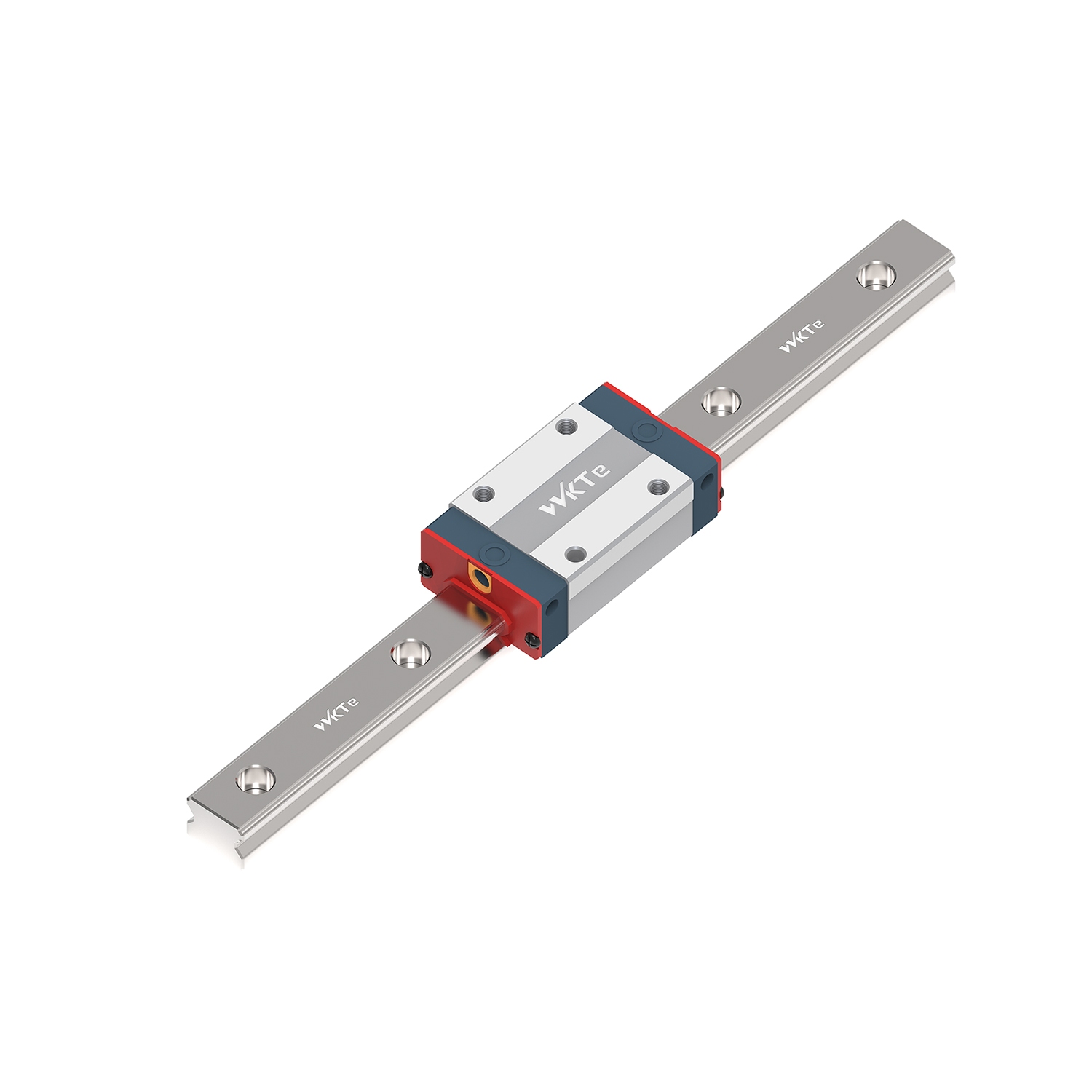
Standard components fail rapidly when deployed outside normal factory conditions. You must adapt your maintenance and selection strategies to counter specific environmental threats.
Food processing and medical manufacturing present brutal challenges. Facilities utilize high-pressure, caustic cleaning protocols daily to ensure sanitation. These harsh washdowns strip away standard grease and corrode standard steel instantly. You must utilize FDA and USDA compliant food-grade lubricants. These specialized greases resist water washout while maintaining safe chemical compliance. Additionally, you must actively inspect 300-series stainless steel components. While resistant to general rust, stainless steel remains highly susceptible to stress corrosion cracking under chemical attack. Monitor mounting holes and rail edges for microscopic web-like cracks.
Woodworking, stone cutting, and metal grinding generate aggressive particulate contamination. Even the best factory-installed end seals cannot indefinitely block microscopic abrasive dust. In these environments, you must implement secondary physical barriers. Bellows and heavy-duty telescopic covers physically shield the rail from falling debris. For heavy metal chips, install heavy-duty metal scrapers ahead of the polymer seals. These scrapers shear away hot chips before they can melt the plastic end-caps and destroy the bearing block.
Semiconductor manufacturing operates under strict particulate regulations. Standard greases continuously release microscopic oil mists into the air, contaminating cleanrooms instantly. You must use specialized low-outgassing, low-particulate greases. However, these cleanroom lubricants introduce specific trade-offs. They generally provide lower load-bearing capacities and inferior film strength compared to standard industrial grease. Consequently, they require much stricter monitoring and lighter payload limits to prevent sudden metal-to-metal contact.
Operating Environment | Primary System Threat | Recommended Protection Strategy | Lubrication Approach |
|---|---|---|---|
Food / Medical Washdown | High-pressure caustic chemicals, rust | Use 300-series stainless steel, avoid blind holes | FDA/USDA compliant, water-resistant grease |
Heavy Debris / Grinding | Abrasive dust scoring the raceways | Install bellows, telescopic covers, metal scrapers | High-viscosity grease to flush out contaminants |
ISO Cleanroom | Airborne particulate contamination | Limit speeds, avoid complex external shielding | Low-outgassing, low-particulate specific grease |
Accurate root cause analysis prevents repeated failures. When a system breaks down, you must read the physical evidence left on the components. Different failure modes tell entirely different stories about your operational reality.
Many technicians incorrectly blame poor lubrication when they see chunks of metal missing from the raceway. While lubrication failure can cause surface damage, deep spalling and flaking point to a different culprit. This damage represents severe metal fatigue caused directly by overloading or severe misalignment. When rails are mounted unevenly, the bearing block binds. This forces immense, uneven pressure onto just a few steel balls. The subsurface shear stresses eventually cause the steel structure to fracture. Large flakes of material break away, leaving jagged craters behind. If you simply replace the block without realigning the base structure, the new block will suffer the exact same fate.
Fretting corrosion confuses many maintenance teams. They notice a fine, reddish-brown dust accumulating around the end caps and assume it is standard rust from water exposure. However, fretting corrosion occurs entirely dry. It is caused by continuous micro-vibrations while the machine is stationary. These tiny oscillations squeeze the protective lubricant out from between the balls and the raceway. The resulting dry metal-to-metal contact microscopic tears the surface. The torn steel particles immediately oxidize, creating the characteristic red/brown dust. Differentiate this from standard oxidation by checking the surrounding area. True rust covers exposed surfaces broadly. Fretting corrosion stays localized strictly to the contact patches inside the bearing block.
Sudden increases in rolling resistance dictate immediate intervention. If your servo motors report sudden torque spikes, stop the machine immediately. Friction spikes rarely resolve themselves. They usually indicate damaged ball recirculation pathways. If a steel ball cracks or chips, it jams inside the internal return tube. Alternatively, swollen plastic end-caps cause binding. If you used chemical solvents incompatible with the polymer end-caps, the plastic absorbs the chemical and physically swells. This swelling pinches the ball bearings during recirculation, causing severe resistance. Flushing the block will not fix swollen plastics; the block must be replaced.
Knowing exactly when to salvage a part versus when to scrap it saves valuable maintenance budget. Use an objective engineering framework to eliminate guesswork from your decision-making process.
Not all damage requires total system replacement. You must carefully evaluate specific wear thresholds to determine viability. Linear Guide Rails can often be salvaged if the damage is strictly superficial. If you encounter heavily contaminated grease that has turned black, but the steel surfaces remain smooth, the block is salvageable. You can perform a heavy flush using compatible clean grease to push out the contaminated sludge. Similarly, if external polymer wipers crack but the internal balls remain shiny, simply replace the wiper cassettes.
Conversely, certain conditions are absolutely terminal. If you feel physical pitting, jagged craters, or deep grooves on the steel raceway, the rail is dead. Do not attempt to polish out raceway craters. Furthermore, a complete loss of preload is unrecoverable. Once the internal rolling elements wear down enough to allow side-to-side slop, the system can never regain its factory rigidity. Continuing to run terminal rails will destroy your connected drive mechanisms.
Repeated failures indicate that your current system is fundamentally mismatched to your application. Instead of repeatedly replacing standard blocks, transition to a specialized solution. If your application causes frequent spalling due to extreme heavy loads, upgrade from ball guides to roller guides. Roller guides use cylindrical rollers that provide massive line-contact area, drastically increasing rigidity and load capacity.
If human error causes repeated lubrication starvation, adopt guide blocks featuring self-lubricating reservoirs. These specialized cassettes attach to the end of the block. They slowly release exact amounts of oil onto the raceway over thousands of kilometers. This technology effectively mitigates human error in maintenance schedules, ensuring continuous protection without manual intervention.
Reactive maintenance drains resources. Engineers should immediately audit their current facility failure rates. Document exactly which machines consume the most spare parts. Next, consult directly with specialized manufacturers. Bring your actual failure data to these meetings. Spec out replacement systems aligned strictly with your actual operating realities, rather than relying solely on theoretical on-paper specifications. An upgraded system pays for itself rapidly by eliminating chronic downtime.
Observed Condition | Diagnostic Assessment | Recommended Action |
|---|---|---|
Black, sludgy grease, smooth motion | Contamination without structural wear | Purge completely with clean grease until clear |
Cracked polymer end seals, shiny track | Environmental wear, internals safe | Replace end seals and wiper cassettes immediately |
Deep pitting and flaking on raceway | Terminal metal fatigue / Overloading | Replace rail and block; evaluate roller upgrade |
Red/brown dust, localized catching | Severe fretting corrosion | Replace block; implement anti-vibration measures |
Diligent maintenance of linear guide rails is a strategic operational investment, not just a routine housekeeping task. When you systematically monitor these precision components, you directly safeguard your production timelines and product quality. Neglect guarantees premature failure, while structured care guarantees decades of reliable performance.
Long-term reliability fundamentally requires aligning your lubrication strategies, environmental protection methods, and regular inspection protocols with the specific demands of your unique application. A cleanroom system demands an entirely different approach than a stone-cutting facility. Acknowledge your operating reality and adapt accordingly.
We strongly encourage readers to review their current maintenance schedules immediately. Do not wait for the next catastrophic failure. Consult with technical sales engineers to obtain application-specific advice regarding your toughest environments. Download a comprehensive troubleshooting checklist and deploy it to your maintenance teams today. Proactive action always outpaces reactive repair.
A: Lubrication frequency is not determined by calendar days. It is calculated using a formula comparing total distance traveled against operating hours. Heavy loads and high speeds require more frequent lubrication. Environmental factors modify this heavily. Dusty environments or high-temperature operations drastically shorten intervals, often requiring daily or weekly relubrication to flush out contaminants.
A: No. We explicitly warn against mixing different grease thickeners. For example, mixing a lithium-based grease with a polyurea-based grease causes chemical incompatibility. The mixture will break down, separating the base oil from the thickener. This chemical separation results in a complete loss of lubricating properties, leading to rapid metal-to-metal wear.
A: Disassembling the block to clean it is highly discouraged. Removing the balls often leads to reassembly errors and lost components. Instead, use the flush-and-purge method. Continuously pump fresh, compatible grease into the block while moving the carriage back and forth. The fresh grease will safely push the contaminated sludge out through the end seals.
A: A grinding noise indicates critical mechanical distress. The primary culprits are a complete loss of lubrication, internal component failure, or advanced raceway spalling. If the ball bearings are fracturing or the raceway has developed deep pits, the resulting metal fragments get crushed during movement. Stop the machine immediately to prevent further drive system damage.


